What is Tecnomatix Plant Simulation
Tecnomatix Plant Simulation is a discrete‑event simulation tool used to model and analyze material flow, operations, staffing, and logistics in any production environment. It’s widely used across almost all industries.
Plant Simulation addresses material‑flow and throughput validation, evaluation of control and layout alternatives, optimization of logistics and handling, visualization of production KPIs, and the sizing of capacities such as machines, buffers, and AGVs.
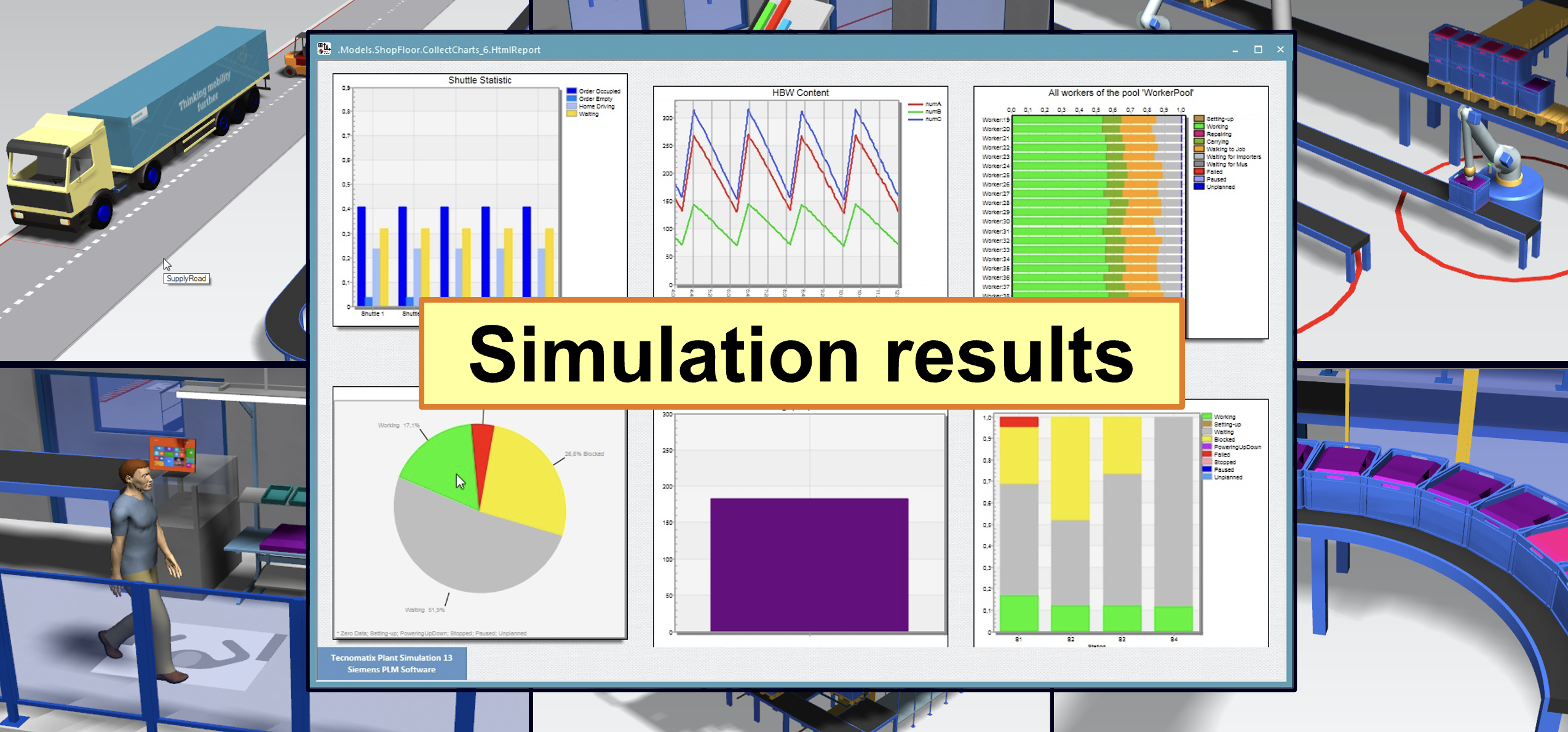
Plant Simulation Results
Tecnomatix Plant Simulation helps identify and remove issues before costly ramp‑up corrections, reduce production‑line investment without risking output, and boost existing system performance through pre‑validated simulation measures.
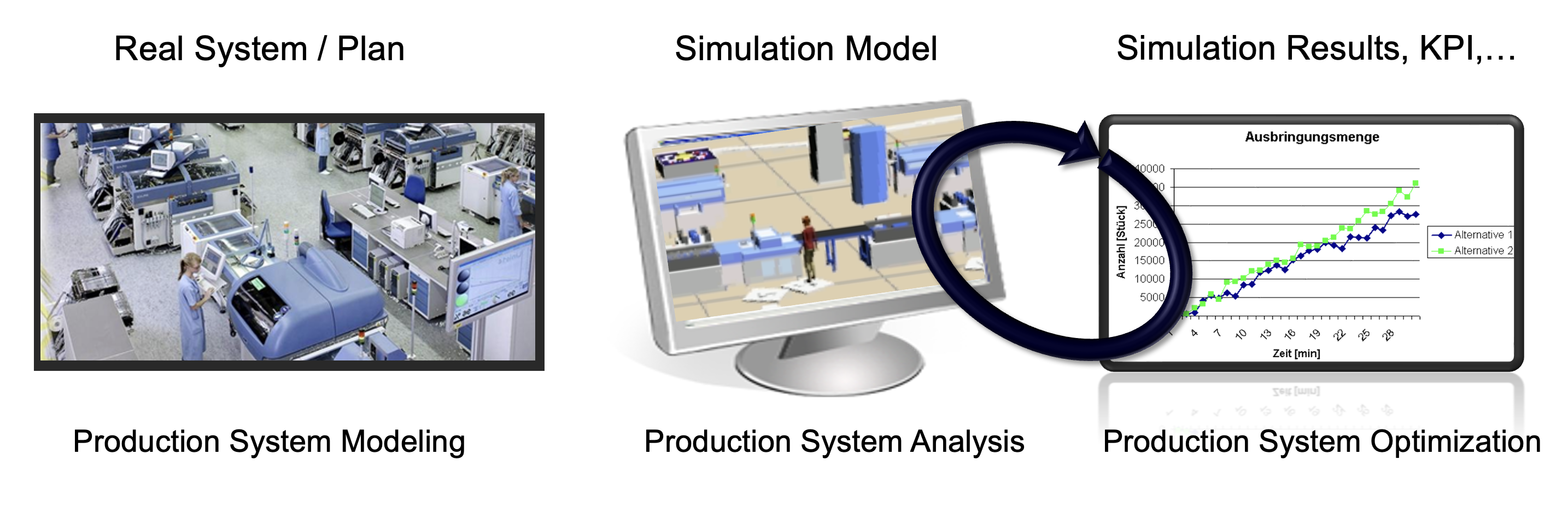
Principles of Discrete Event Simulation
Digital Twin Factory Model in Tecnomatix Plant Simulation
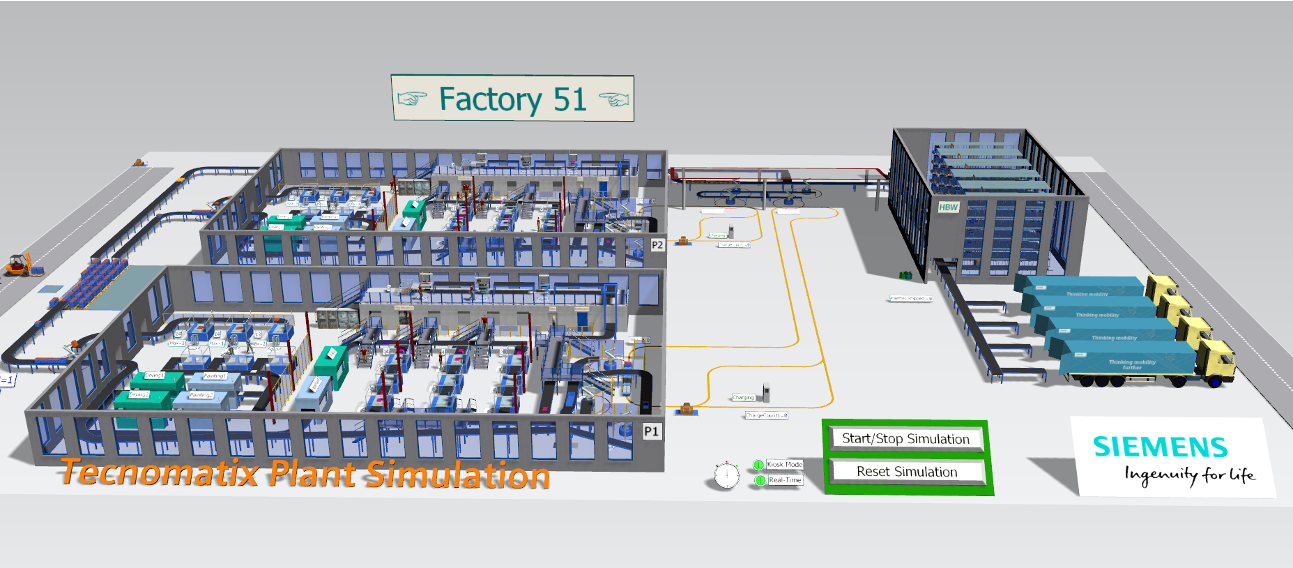
Simulation Details in a Digital Twin Factory Model
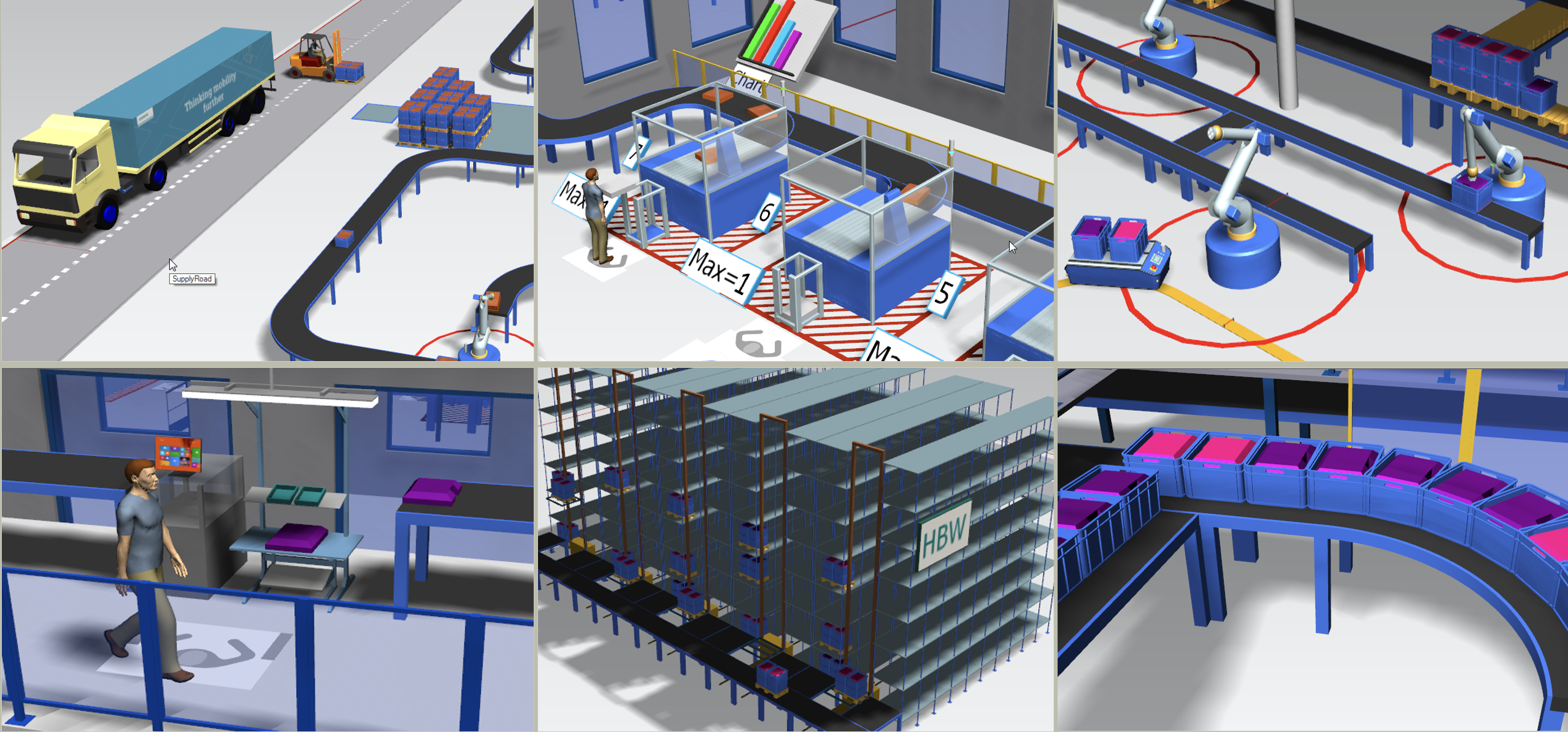
What makes a Digital Twin on Factory Level?
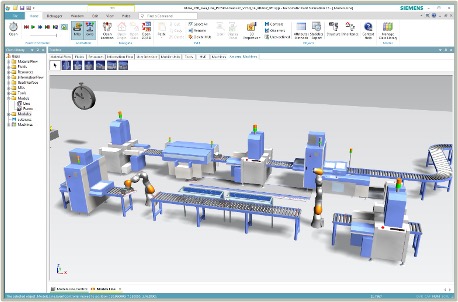
Plant Simulation models key production aspects such as shop‑floor layouts (machines, conveyors, buffers), real‑world processing times and availability, material logistics and storage, shift and staffing systems, production orders and schedules, plant‑control behavior, and energy consumption.
PLANT PERFORMANCE
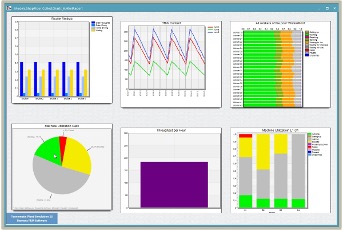
Plant Simulation enables users to evaluate and optimize the digital twin, obtain KPI and throughput results, and access detailed statistics and parameters.
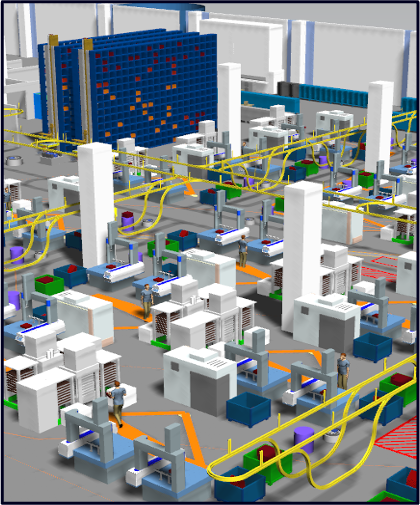
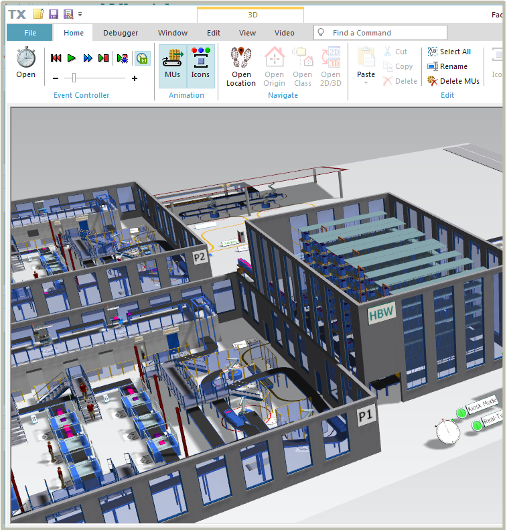
A typical Plant Simulation Example:Storage, Transportation, Personnel, Product Variants, Everything connected as in real Life
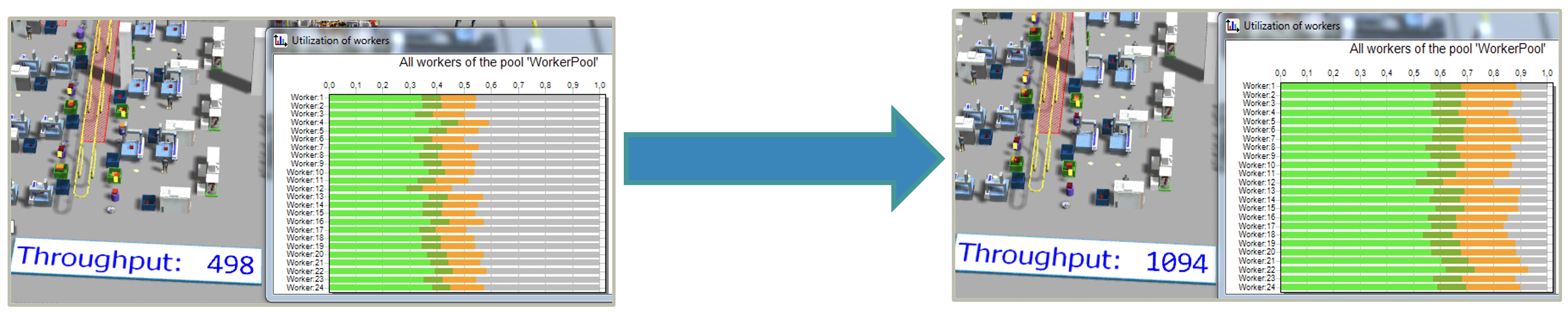
If production throughput is low, the question becomes whether investing in a faster HBW, a faster monorail system, or both is the best way to remove the bottleneck.
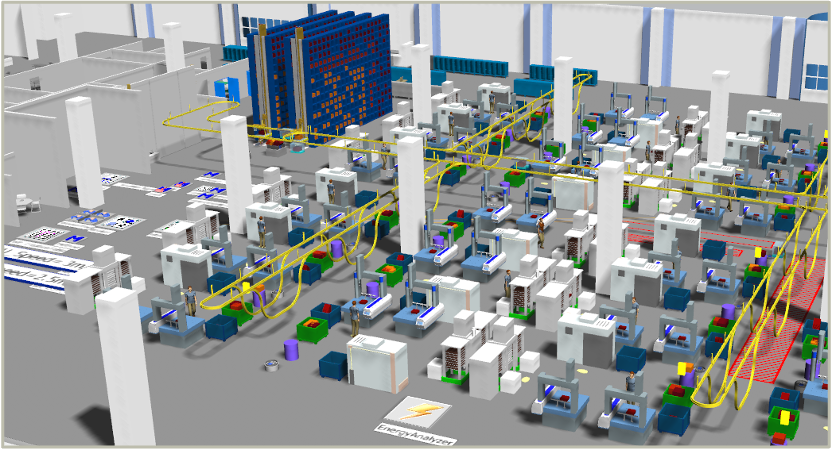
Simulation Result: Better Throughput by improved Intra Logistic and Transportation
The material‑handling system is the bottleneck and is limiting overall performance.
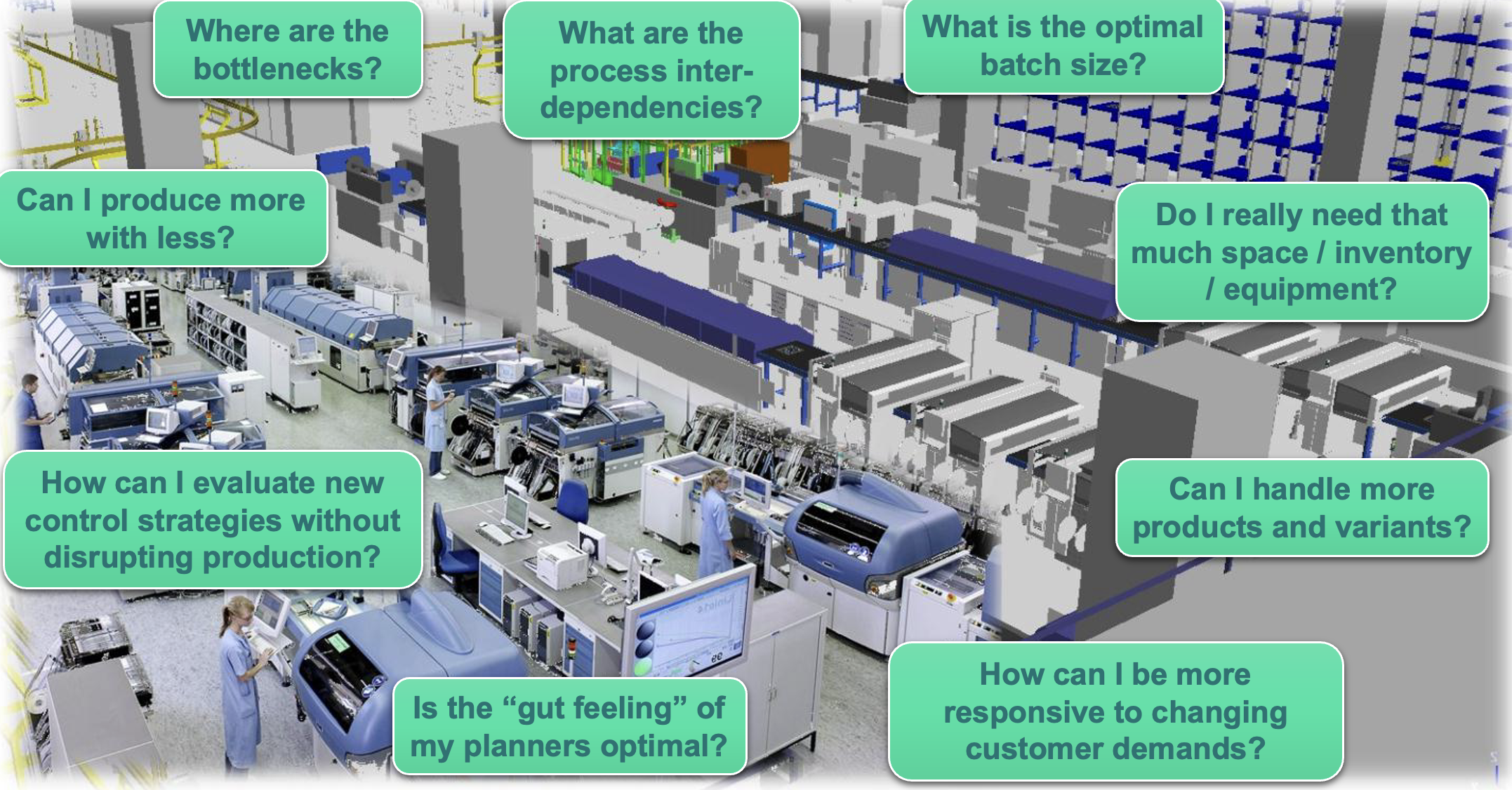
Typical questions where simulation helps to find a good result
KPI Reviews and Statistics Graphs
Solution Summary
Plant Simulation is a powerful tool for building digital‑twin models of manufacturing systems, representing resources, logistics, staffing, and shifts to visualize material flow, utilization, and KPIs, while enabling system optimization and data‑driven decision‑making based on realistic, simulated performance.
Author