
Simcenter 3D for additive manufacturing simulation solution guide
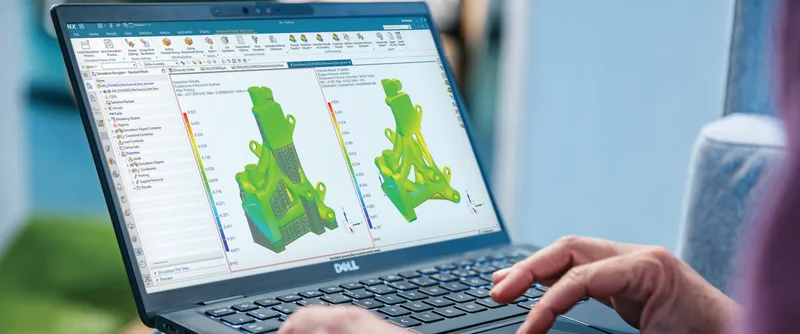
Predict distortion and residual stress in 3D-printed parts before the build.
This six-page solution guide describes how Simcenter 3D simulates the build process of metal powder bed fusion parts, so that distortion and defects can be predicted before printing. It also shows how the predicted distortion is used to pre-deform the geometry, so the part comes out closer to its intended shape.
What the document covers
- The workflow from build preparation in NX Additive Manufacturing to model setup, simulation, postprocessing and compensation
- The enhanced inherent strain method, calibrated from a test print and optionally coupled with a thermal simulation for better accuracy
- Meshing options: voxel meshing for speed and robustness, tetrahedral meshing for thin features, powder meshing and mesh slicing to define layers
- Results such as thermal history, distortion before and after support removal, recoater collisions, support failure, shrinklines and overheating risk
- Process effects including a flexible build plate, stress relief heat treatment and the order of support cuts
- Export of compensated geometry as STL or as a parametric BREP part through the Omnimesh add-on, with a capabilities chart and product prerequisites
Who it is for
Additive manufacturing engineers, application engineers and simulation analysts who print metal parts, with example applications in aerospace and defence, power generation, industrial machinery and automotive.
Related product
 Simcenter 3DStructural, thermal, motion, acoustic and multiphysics simulation in one environment.See the product
More in the Knowledge Center

Have a project in mind?
Tell us what you are building and a NomuTech engineer will get in touch.